FORCIT has been engaged in long-term research and development aimed at creating a nitrogen-free explosive for rock blasting applications. The primary focus has been on an emulsion-based product, branded as Kemiitti HPE, in which hydrogen peroxide solution functions as the oxidizing agent.
Currently, trial operations are underway utilizing an on-site production module for hydrogen peroxide emulsion. The emulsion is produced directly at the point of use due to the insufficient understanding of the risks associated with its transport and storage. As hydrogen peroxide emulsion lacks an assigned UN number, there are no standardized testing protocols or safety requirements based on established risk profiles. Full-scale transport and storage would involve substantial quantities of material, potentially resulting in severe consequences in the event of an incident. To ensure responsible operations, production volumes will be scaled in parallel with improved risk assessment and control measures.
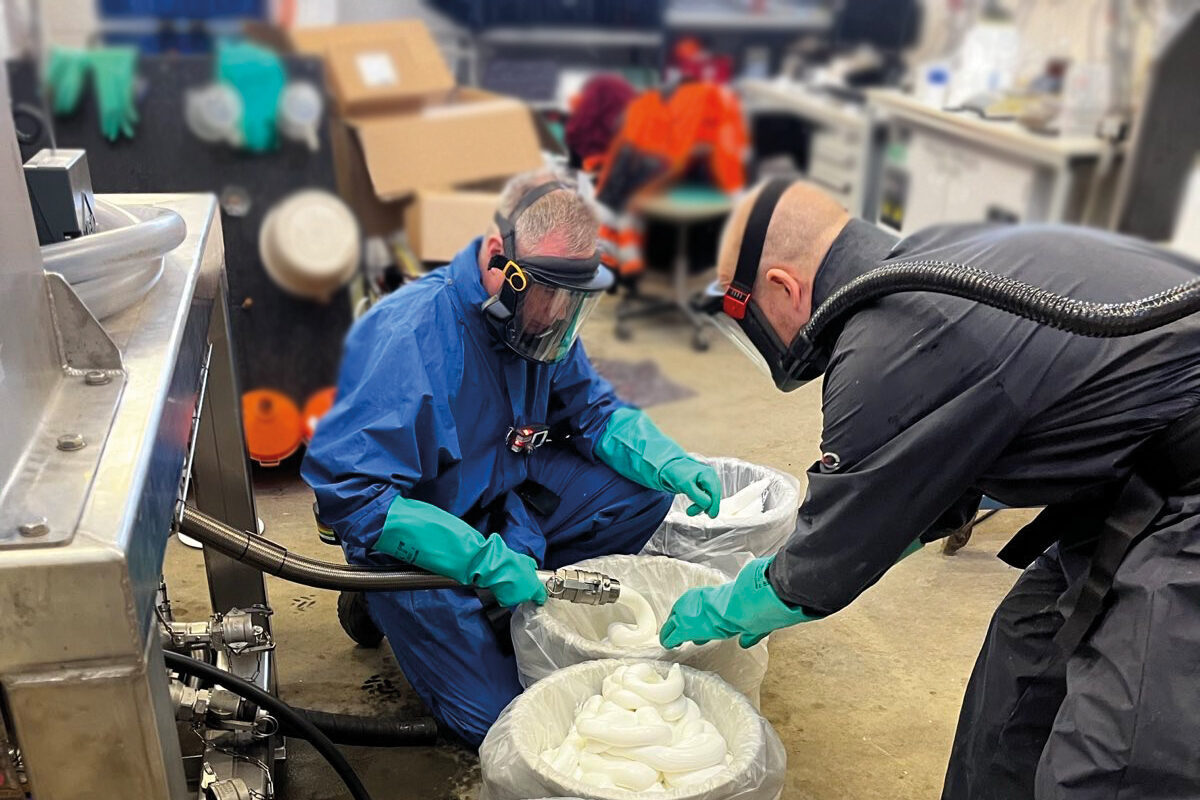
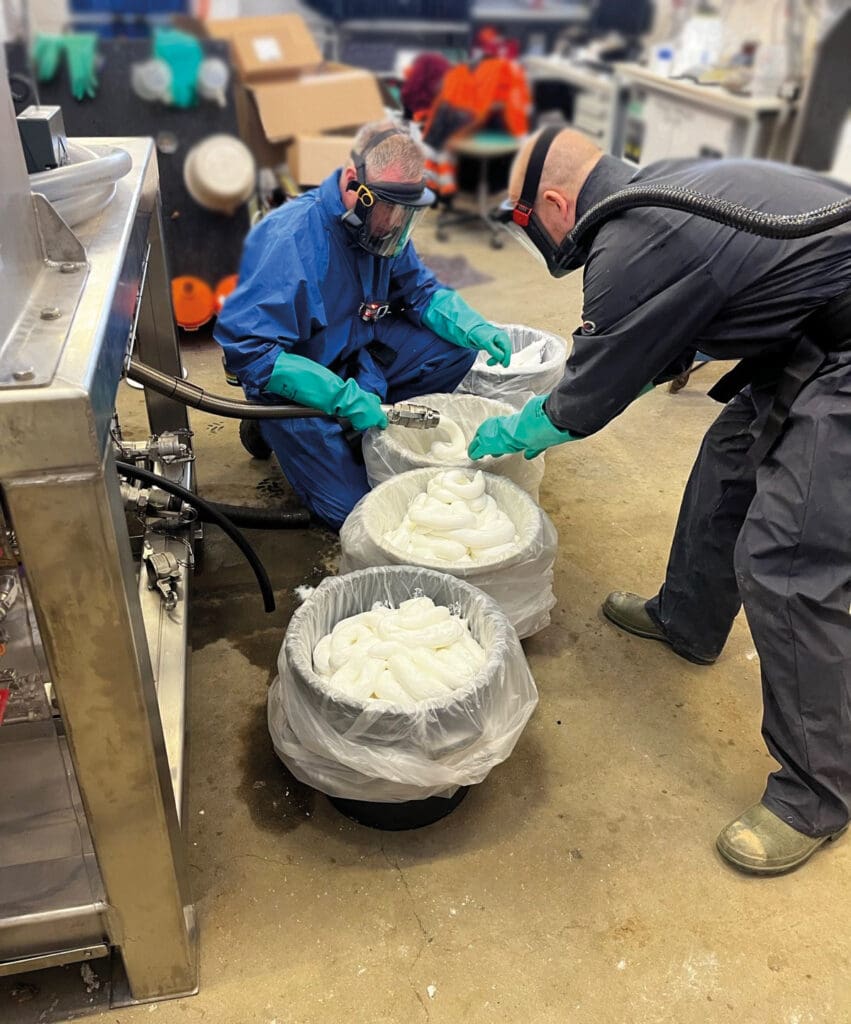
During the testing phase of the production module, particular emphasis has been placed on occupational safety. Air quality measurements at the work site have revealed significantly elevated concentrations of hydrogen peroxide during the handling of both the solution and the emulsion. The occupational exposure limits are 1 ppm over an 8-hour period and 2 ppm over a 15-minute period. Test results have indicated concentrations ranging from 2 to 20 ppm. Given the chemical aggressiveness of hydrogen peroxide, a revised safety protocol has been implemented, necessitating a shift in operational practices. The most notable change is the adoption of powered full-face respirators equipped with ABEK-P2 filters. These respirators provide comprehensive facial protection against splashes, which can cause irreversible eye damage and immediate chemical burns to the skin. Additionally, personnel are now required to wear liquid-tight chemical protective suits, as standard workwear does not offer adequate protection and may ignite upon contact with hydrogen peroxide.
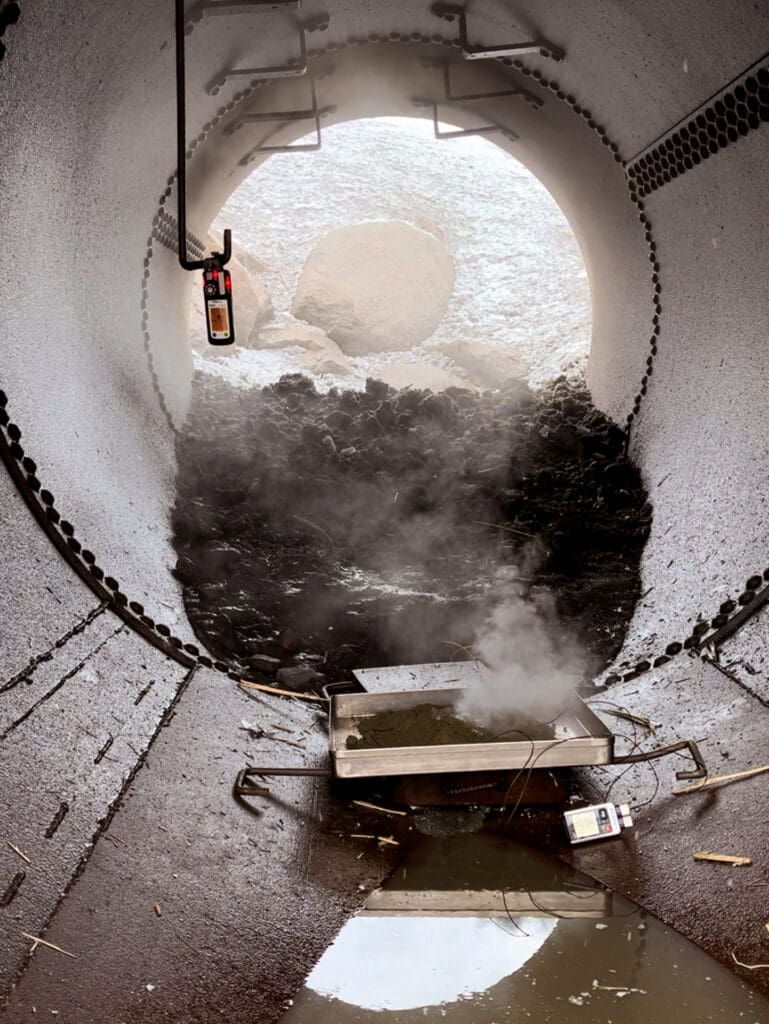
Another critical safety consideration is the high reactivity of hydrogen peroxide emulsion with minerals and other substances commonly found in soil. Virtually all foreign materials present a potential risk of triggering a reaction. The reaction releases oxygen, water, and energy.
The energy released during the reaction causes the emulsion to heat up, which in turn accelerates the reaction rate. The resulting oxygen and water vapor can carry hydrogen peroxide into the air, forming vapor clouds with concentrations far exceeding occupational exposure limits. Measurements have shown that when the emulsion reacts with ore, temperatures can rapidly reach approximately 100°C.
In addition to reactions with minerals and soil constituents, hydrogen peroxide has been observed to volatilize from both aqueous solutions and emulsions even in the absence of chemical reactions. Under such non-reactive conditions, vapor-phase concentrations typically range from 2 to 20 ppm. During strongly exothermic reactions, however, measured concentrations have exceeded 20 ppm. Considering these substantial challenges, FORCIT is progressing toward field trials, which are anticipated to commence in autumn 2024. The primary objectives of these initial trials are to validate the safe handling of the product—taking into account the newly implemented personal protective measures—and to confirm its effectiveness in rock blasting operations.
Text: Timo Halme
Images: FORCIT Explosives