Since autumn 2025, it has become increasingly common in the field to spot a Forcit employee who has swapped their previous orange workwear for a new yellow-and-black outfit. The change has not been merely cosmetic, as the gradual transition to Fristads’ Green collection workwear is also a sustainability initiative. The production process of these garments uses less water than usual, resulting in over 15 million liters of water saved at the FORCIT Group level.
Sustainability is, above all, about everyday choices and changes like these that together create a larger impact. High-level strategies set the direction and reports show where we stand, but it is practical actions that drive progress. Wise choices can be made in many different ways:
Energy efficiency: FORCIT has recently implemented several projects to improve energy efficiency. These include switching to fossil-free electricity contracts, improving building insulation, utilizing air-source heat pumps, and transitioning to LED lighting at the Vihtavuori production site. In addition, the use of solar panels has been increased, and opportunities for energy recovery have been explored.
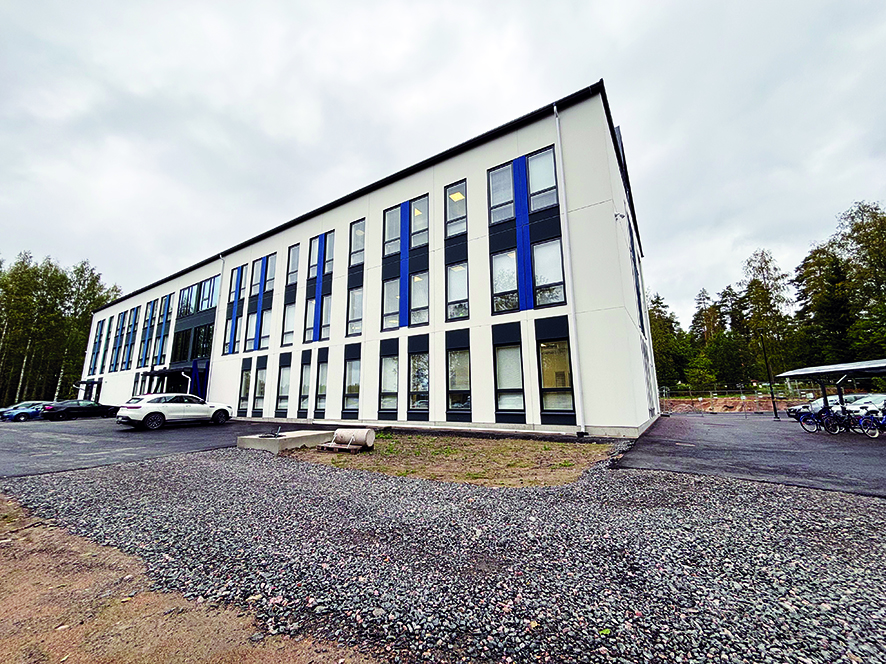
Upgrading process equipment also improves energy efficiency, with good examples being the renewed compressors in Hanko and the brand-new matrix manufacturing equipment in Vihtavuori. At the Vihtavuori site, FORCIT operates in a new shared office with Nammo Vihtavuori Oy, where solar energy covers all electricity needs of the office building during spring, summer, and autumn.
Electric vehicles and fuel: Following the new company car policy, the share of electric vehicles in the Group has risen to 44%. At the same time, charging points have been installed at our sites to enable emission-free mobility for both our personnel and our stakeholders. Due to ADR regulations, explosive and ammonium nitrate transports cannot be carried out using electric vehicles, but fuel consumption and emissions can be reduced through route optimization and modern, well-maintained equipment. You can also order deliveries from us using renewable diesel.
Recycling: We are currently exploring whether recycled materials could be better utilized in production. We have already made significant progress in offering recycling of cardboard explosive packaging and have officially reapproved (according to ADR regulations) IBC containers to extend their service life. Packaging materials, such as IBC containers, are reused whenever possible. Materials that reach the end of their lifecycle are recycled.
Every single action—whether it is a new procurement agreement, an energy-efficient process, or an optimized transport—is a step in the right direction. Effective sustainability work is, above all, about long-term global impact through local practical solutions. We advance sustainability best together, so if you have an idea in your daily work on how we could further improve our operations, please share it boldly with your FORCIT contact person!
This article was published in Ruutiset 2/2025 (in Finnish).
Text: Saila Pesonen
Photo: Sari Fagerström
What sustainability initiatives has FORCIT implemented to reduce its environmental impact?
FORCIT has implemented a range of sustainability initiatives, including improving energy efficiency, increasing the use of renewable energy, expanding its electric vehicle fleet, installing charging infrastructure, optimizing transportation, and enhancing the reuse and recycling of materials.
Why are everyday actions important in sustainability work?
Everyday actions are important because small improvements, such as energy-efficient processes, sustainable procurement, material reuse, and transport optimization, can collectively create a significant long-term environmental impact.